
Your back hurts, but practice starts in twenty minutes. You stretch, wince, and decide it is probably nothing. One more workout cannot hurt, right? Unfortunately, that decision can turn a manageable stress injury into a much more stubborn problem.
A pars fracture is a small crack in the pars interarticularis, a narrow section of bone connecting parts of a vertebra. It often develops through repeated stress, particularly in athletes who frequently bend backward or rotate their spine. Catching the injury early can improve the chances of bone healing and help prevent months of persistent pain from becoming the new normal.
Table of Contents
The Injury That Doesn’t Always Announce Itself
A pars fracture rarely needs a dramatic accident to begin. Gymnastics, football, weightlifting, and other demanding sports can place repeated pressure on the lower spine until the bone starts to weaken.
At first, the discomfort may appear only during exercise. Rest might make it disappear, which seems reassuring. It is also a tempting excuse to keep training.
That pattern deserves attention. Pain that returns during back extension, worsens with activity, or lingers despite reduced training may indicate something more than an ordinary muscle strain. Teenagers and young athletes can be particularly vulnerable because their developing spines are exposed to repetitive sporting loads.
The trouble is that pain intensity does not always reveal how far an injury has progressed. Waiting for severe symptoms before seeking help is a poor strategy when the underlying problem may be a developing bone injury.
Early Diagnosis Can Change the Equation
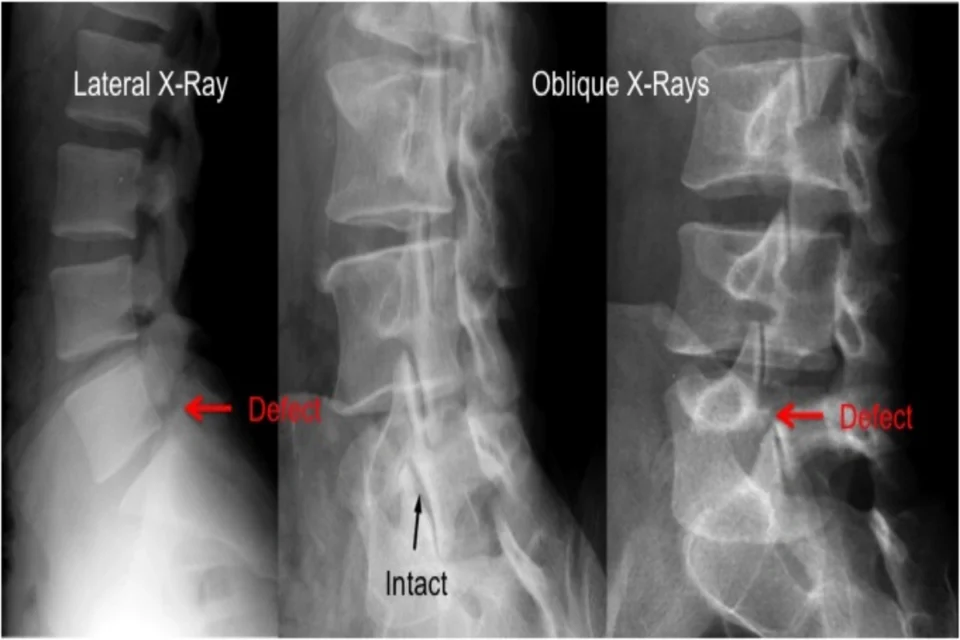
Finding a pars fracture is not always as simple as taking an X-ray. Standard X-rays can identify some fractures, but early stress injuries may remain hidden.
An MRI can reveal changes inside the bone associated with an early stress reaction, sometimes before a complete fracture forms. CT scans provide a more detailed view of the bone itself and can help clinicians assess the fracture’s structure.
Why does that distinction matter? A developing stress injury has a different healing outlook from an established fracture with chronic changes. Earlier-stage injuries generally have greater potential for bony healing, while longstanding defects may be more difficult to unite.
The sooner the injury is recognized, the sooner a clinician can recommend appropriate activity changes and treatment. That does not guarantee a quick recovery, but it can prevent the avoidable gamble of continuing to stress an already vulnerable area.
Give the Bone a Chance to Recover
Once a pars fracture is diagnosed, treatment commonly starts without surgery. The first step is often modifying activities that aggravate the injury, particularly movements that repeatedly load the lower spine.
For a competitive athlete, this can be the hardest part. Sitting out can feel like falling. It might seem like you’re losing time, but pushing through pain can make things worse. It might extend the recovery, keep you away from your sport longer than needed.
Physical therapy plays a role in healing. It helps get movement that strengthens the muscles and supports the spine and fixes movement patterns that strain the back. For some people a brace may help. That decision depends on the type of fracture. What the doctor says is best. The correct treatment path depends on where the injuries are in its healing process, how the person feels and how their body responds to recovery.
One important thing to remember: feeling better doesn’t mean the bone is healed. You might feel pain but the fracture could still be fragile. Returning to sport should be based on progress shown in exams and tests, not how good you feel.
What Happens If You Wait?
Not all pars fractures get worse, but ignoring them can be risky. In some cases, the damaged area can lead to spondylolisthesis. That’s when one bone in the spine slips forward over the one below it. This can cause pain, stiffness, and affect how the spine works.
Chronic fractures can also stay painful, especially if you keep pushing your body without giving it time to heal. Surgery isn’t common. It’s only considered when symptoms don’t go away or when the spine becomes unstable.
Getting checked early gives you an idea of what’s happening. It helps you make choices about your recovery and your return to sport.
Know When to Stop Guessing
Recurring lower back pain deserves attention when it repeatedly flares during sports, particularly with backward bending. An evaluation can help distinguish a pars fracture from other causes of discomfort and identify an appropriate treatment plan.
Patients can also explore the symptoms, diagnostic process, and treatment options described in this guide to pars fracture care.
Resting for a few days might seem easier than scheduling an appointment. But when a small crack in the spine is involved, finding out early can make a meaningful difference in the road back to normal activity.