
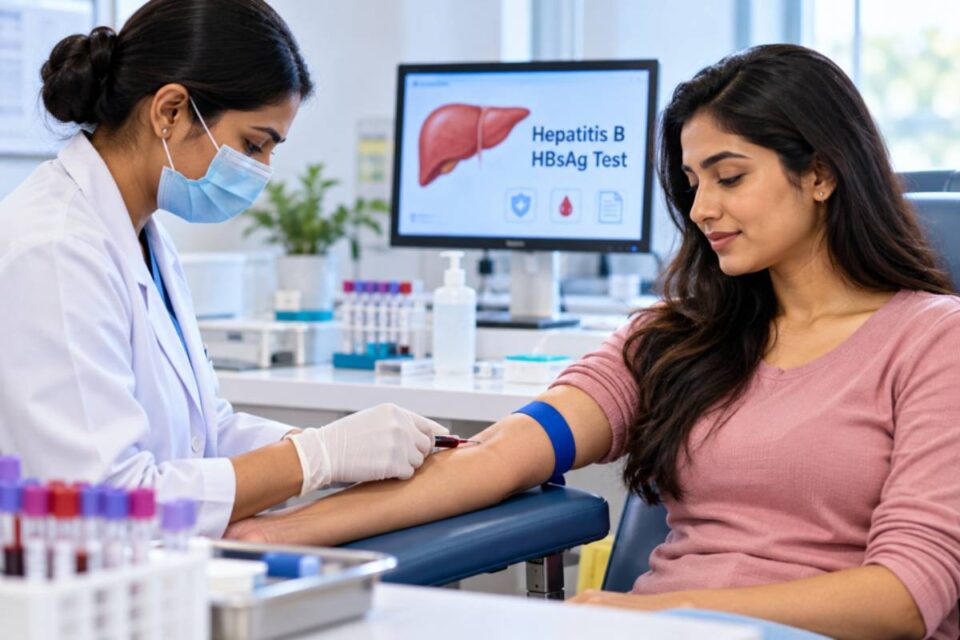
Hepatitis B is a viral infection of the liver that can go undetected for years while quietly damaging the organ. India is home to a significant hepatitis B carrier population, and many people learn about the infection only during their routine blood tests or when complications appear. Screening remains the most effective way to identify the virus early in the infection process and start treatment before any serious damage develops. An HBsAg test detects a protein on the surface of the hepatitis B virus and shows whether the infection is currently active. Knowing when to get tested, which symptoms warrant it, and how to interpret the result helps people act on hepatitis B risk at the right time.
Table of Contents
What is an HBsAg Test
HBsAg stands for hepatitis B surface antigen. It is a protein found on the outer surface of the hepatitis B virus. When the virus enters the body, this antigen appears in the blood within a few weeks and remains detectable during active infection. Its presence confirms current hepatitis B, either recent or long-standing.
The HBsAg test is a blood-based screening test that detects this antigen. A positive result confirms current hepatitis B infection, either recent or long-standing. A negative result means active infection is unlikely at the time of testing.
Symptoms that may prompt the test
The hepatitis B virus spread through contact with blood, semen or other body fluid. Several groups of papulation are at higher risk of hepatitis B virus infection and subsequently the need for HBs screening is highest among these group. Sharing your medical history and lifestyle context can help the doctor to recommend whether the test is appropriate. The following categories are commonly advised to undergo screening.
- Persistent tiredness that does not improve with rest.
- Yellowing of the skin or whites of the eyes (jaundice).
- Dark urine or pale, clay-coloured stools.
- Loss of appetite or unexplained weight loss.
- Right-sided upper abdominal pain or discomfort.
- Nausea, vomiting or low-grade fever.
- Joint pain or, in some cases, a skin rash.
Many people with chronic hepatitis B show no symptoms at all, and the infection is picked up only on routine blood tests. For this reason, risk-based screening is often more useful than waiting for symptoms to appear.
Who Should Be Screened
Routine HBsAg screening is recommended for several higher-risk groups in India. Recognising personal risk factors helps determine when testing is appropriate.
- Pregnant women, as part of routine antenatal care.
- Healthcare workers exposed to blood or body fluids.
- Household and sexual contacts of people with known hepatitis B.
- Patients on dialysis or receiving blood products frequently.
- People with multiple sexual partners or history of injecting drug use.
- Travellers to areas with high hepatitis B prevalence.
- Individuals with unexplained raised liver enzymes.
- Before starting immunosuppressive therapy or chemotherapy.
Screening in these groups supports early detection and prevents transmission. Vaccination for close contacts of a positive individual is often recommended as a next step.
How the test is performed
The test requires a routine blood sample drawn from a vein in the arm. No fasting or special preparation is required. The lab processes the sample using immunoassay techniques, and results are usually available within a day. Patients should mention prior hepatitis B vaccination, past hepatitis history and any current medications when the sample is being collected, as this helps the treating doctor interpret the result.
Understanding the results
Lupin Diagnostics reports HBsAg results in a standard qualitative format.
| Test | Reference range |
| HBsAg | Non-reactive |
A non-reactive result suggests that active hepatitis B infection is unlikely at the time of testing. A reactive result confirms current infection and prompts a wider workup. This usually includes HBeAg to assess viral activity, HBV DNA to measure viral load, liver function tests, and often an abdominal ultrasound. A qualified medical professional should always interpret results, since they guide decisions about antiviral treatment, family screening, and long-term monitoring.
Choosing A Reliable Laboratory For Your Hbsag Test
Accurate hepatitis B screening relies on precise laboratory techniques, high-quality reagents, proper sample handling, standardised reporting and clear communication of results all affect clinical decisions. Lupin Diagnostics offers HBsAg testing and broader hepatitis panels across India through its National Accreditation Board for Testing and Calibration Laboratories (NABL) accredited labs, with free home sample collection available in major cities.
The Bottom Line
The HBsAg test is the starting point for hepatitis B screening and plays a central role in catching infection early. Testing is straightforward and particularly useful for pregnant women, healthcare workers, and household contacts of infected individuals. To book an HBsAg test or a broader liver workup, visit lupindiagnostics.com or call 7030 300 400.
Also Read: 6 Best Psychiatry Recruitment Agencies in the UK (2026)