
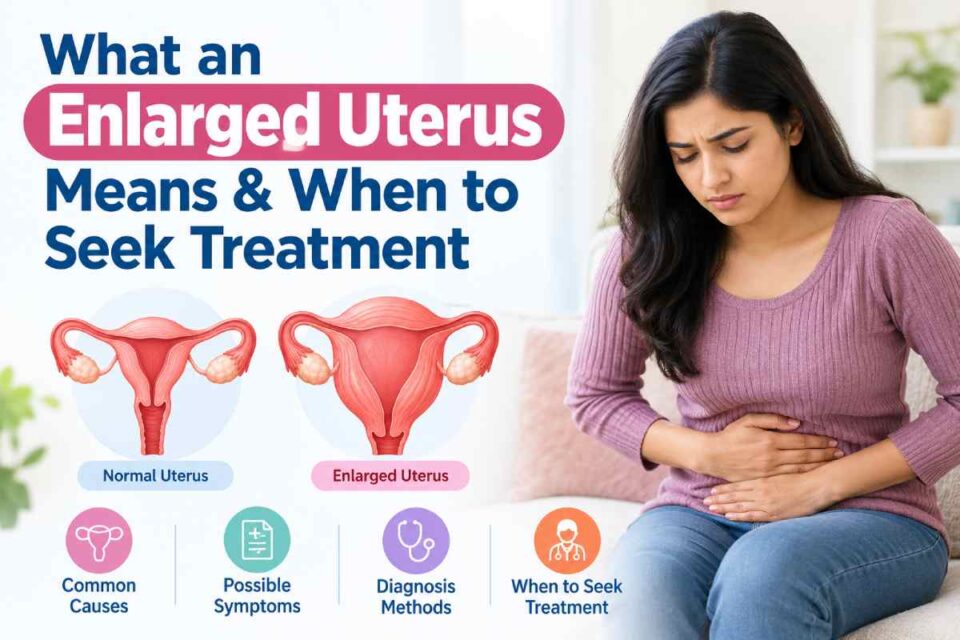
An enlarged uterus is not a diagnosis in itself. It is a finding, something a doctor notices during a pelvic exam or sees on imaging, that points toward an underlying condition that needs to be identified. For many women, the discovery that their uterus is larger than normal raises immediate questions about what is causing it, what symptoms to expect, and what the options are. Understanding the common causes and the treatments available today gives a clearer picture of what comes next.
Table of Contents
What Causes a Uterus to Become Enlarged
The uterus enlarges for several different reasons, and identifying the specific cause is the starting point for any treatment conversation.
Uterine fibroids are the most common cause of an enlarged uterus in women of reproductive age. Fibroids are noncancerous growths that develop in or on the muscle wall of the uterus and can range from the size of a seed to the size of a grapefruit or larger. Multiple fibroids, or a single large fibroid, can make the uterus feel and appear significantly enlarged. They are estimated to affect up to 70 to 80 percent of women by the time they reach menopause, though many women have fibroids without symptoms.
Adenomyosis is another common cause. In adenomyosis, the tissue that normally lines the inside of the uterus grows into the muscular wall of the uterus itself, causing the wall to thicken and the uterus to enlarge. Adenomyosis typically produces heavier than normal periods and significant menstrual cramping alongside the uterine enlargement.
Pregnancy is the most obvious cause of uterine enlargement and is always ruled out when evaluating an enlarged uterus in a woman of reproductive age. Less commonly, uterine cancer, ovarian cysts, and other gynecological conditions can contribute to or cause the finding.
Symptoms That Often Accompany Uterine Enlargement
Whether an enlarged uterus causes symptoms depends significantly on what is causing it and how pronounced the enlargement is. Some women with significantly enlarged uteruses have minimal symptoms and discover the finding incidentally during a routine exam or imaging for an unrelated issue.
When symptoms are present, they commonly include heavy or prolonged menstrual bleeding that requires frequent pad or tampon changes, pelvic pressure or a feeling of fullness in the lower abdomen, painful periods, pain during intercourse, frequent urination caused by the enlarged uterus pressing on the bladder, and difficulty emptying the bowel when the uterus presses posteriorly. Lower back pain is also common when the uterus has enlarged significantly.
The combination of heavy bleeding and pelvic pressure is particularly common when fibroids are the underlying cause. The bleeding can be significant enough to cause iron deficiency anemia, which produces fatigue, weakness, and shortness of breath that many women do not immediately connect to their gynecological symptoms.
Treatment Options Including Non-Surgical Approaches
Treatment for an enlarged uterus is directed at the underlying cause rather than the enlargement itself. For fibroids, which are the most common cause, the treatment options have expanded significantly beyond the traditional choice between medication management and hysterectomy.
Uterine fibroid embolization is a minimally invasive procedure that treats fibroids by cutting off their blood supply. A radiologist guides a catheter through a small incision to the arteries feeding the fibroids and delivers tiny particles that block blood flow, causing the fibroids to shrink over the following weeks and months. USA Fibroid Centers specializes in this approach, and their resource on enlarged uterus explains how uterine fibroid embolization addresses fibroid-related uterine enlargement without the recovery time, blood loss, or risks associated with surgical removal.
The procedure is performed under moderate sedation rather than general anesthesia, typically takes under an hour, and involves a recovery period of one to two weeks rather than the four to six weeks that myomectomy or hysterectomy require. For women who want to preserve their uterus and avoid surgery, it represents a meaningful alternative to the traditional surgical options.
When to See a Specialist
Heavy periods that interfere with daily life, pelvic pressure that is persistent or worsening, or a pelvic exam finding of an enlarged uterus are all reasons to have a thorough evaluation with a gynecologist or fibroid specialist. Early evaluation produces more treatment options and more time to make an informed decision before symptoms progress to the point where emergency intervention becomes necessary.
Also Read: Dry Skin Skincare Routine 2025