
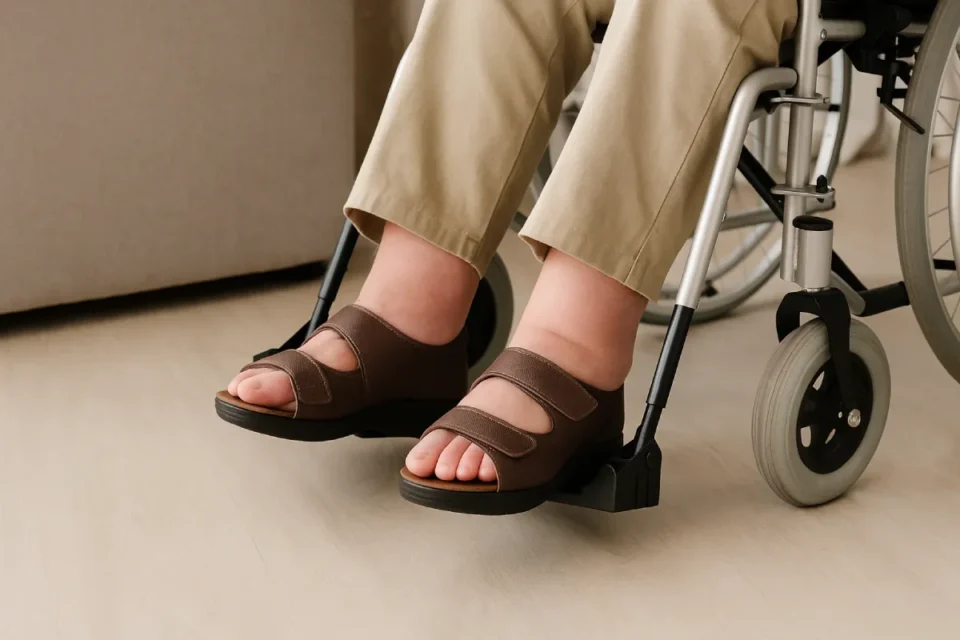
By the end of a shift, the shoes you put on without thinking can feel tight across the top. You loosen the laces, but the sides still squeeze. Buying the next size up seems sensible until the new pair starts slipping at the heel.
Swelling changes the volume of the foot, sometimes in places that extra length barely helps. Suitable footwear needs enough width and depth, secure fastening and room for adjustment. Before buying, however, establish whether the swelling is a familiar, assessed pattern or a new symptom that needs attention.
Foot health is one part of overall well-being, and persistent physical symptoms should be considered alongside a person’s wider health. A holistic healing approach looks at the connections between physical health, daily habits, and mental well-being rather than treating every concern in isolation.
Table of Contents
Why Do Feet Swell Towards Evening?
Swelling caused by fluid collecting in tissues is called oedema. Long periods of sitting or standing can contribute, but medicines, vein problems, injuries and conditions affecting the heart, kidneys or liver are among the other possible causes. Timing alone does not establish what is responsible.
A working day can involve surprisingly little movement. Standing at a workstation or sitting behind a steering wheel for hours is different from regularly walking.
Daily routines also influence other aspects of physical recovery, including sleep. Maintaining healthy habits, managing discomfort, and following a consistent bedtime routine can contribute to better rest. These tips for achieving a perfect night’s sleep offer practical ideas for improving your nighttime routine.
In chronic venous insufficiency, valves in the leg veins do not function properly, allowing blood to pool and pressure to increase. Swelling may occur alongside aching or heaviness.
Seek urgent advice for unexplained swelling affecting one foot or leg, sudden or severe swelling, redness, heat or significant pain. Swelling with breathlessness or chest pain needs emergency assessment. In the UK, call 999. People with diabetes should also seek urgent advice about swollen feet or ankles.
Once the cause has been assessed, footwear becomes part of managing everyday comfort.
1. Width That Matches the Whole Forefoot
Start by identifying where your current pair presses. Tightness beside the little toe is different from pressure over the top of the foot.
A wide-fitting shoe provides additional space across the forefoot, but its shape still matters. A tapered front may squeeze the toes despite a generous width designation.
When comparing mens wide fit shoes for swollen feet, examine the outline alongside the size chart. Look for a front that follows your foot rather than narrowing sharply around it.
Guy’s and St Thomas’ NHS Foundation Trust recommends considering the sole’s shape when little toes remain squeezed in wide shoes. An inward-curving outer edge may be part of the problem; a straighter design can provide a better match.
Judge width while standing and walking. A shoe that feels adequate when you are seated may become restrictive under your full weight.
2. Enough Depth Above the Toes and Instep
Swelling can make the foot fuller vertically. That is why an extra-wide pair may still feel tight beneath the tongue or across raised toe joints.
Depth is the usable space between the footbed and the upper. Check it separately from width. Your toes should not be pressed against the roof, and the tongue should lie comfortably without digging in.
Lincolnshire Partnership NHS Trust advises choosing shoes deep and wide enough for both the foot and any insoles or supports used with them.
Avoid trying to solve insufficient depth by leaving the fastening almost undone. That can sacrifice heel hold without removing contact elsewhere. A different shoe construction may be necessary.
3. Adjustable Fastening With a Useful Range
Laces and adjustable straps allow the fit to change through the day. They also help hold the midfoot while leaving room around the toes.
Test the fastening at both ends of its range. Does it secure the shoe when swelling is lower? When your foot is fuller, does the strap still overlap adequately, or does it barely reach?
An elastic opening offers some flexibility, but check how firmly it presses across the foot. Stretch does not automatically mean comfortable adjustment.
NHS Forth Valley recommends adjustable fastenings to hold the foot securely and reduce friction. Its guidance also stresses that footwear should remain comfortable around the heel.
Take the time to open shoes properly before putting them on. Forcing your foot through a narrow entrance can make an otherwise roomy interior difficult to use.
4. A Smooth Upper Without Pressure-Creating Details
Feel inside the shoe, particularly around the toes, tongue and heel. Look for prominent stitching, folded lining or a firm edge positioned over an uncomfortable area.
External panels matter too. A decorative overlay may restrict stretch exactly where the rest of the upper feels forgiving.
Rotherham Doncaster and South Humber NHS Foundation Trust cautions that seams and decorations around the toes can irritate the skin. Its footwear guidance also highlights tight sock tops and troublesome sock seams.
Try the shoes with your usual socks. Thick cushioning changes the space available, while wrinkled fabric creates its own rubbing points.
If you have reduced sensation, do not rely entirely on whether you can feel contact. Have the fit assessed and inspect your skin after wearing the shoes.
5. A Stable Sole and Secure Heel
A roomy shoe should still feel controlled when you turn, stop or walk down a gentle slope.
Look for a base that supports the foot comfortably and a heel section that holds without pinching. Excess movement can become frustrating even when the toes have plenty of space.
Guy’s and St Thomas’ athletic-footwear guidance identifies a sole broader than the ball of the foot and a stable midsole as useful features. These are separate from how soft the cushioning feels.
Match the outsole to your environment. Wet pavements, indoor floors and uneven paths place different demands on grip.
For work, also check whether your role requires protective footwear. A comfortable casual trainer cannot replace footwear specified for workplace hazards.
6. Breathable Materials That Suit the Conditions
Damp socks and an overheated shoe can make a long day more uncomfortable. Choose an upper suited to the weather and your workplace.
Lincolnshire Partnership NHS Trust recommends breathable materials to help protect feet from becoming hot and sweaty. It notes that both leather and appropriately designed manufactured materials can be suitable.
Waterproofing may be useful outdoors, but assess indoor comfort as well. Someone moving between a wet yard and a heated office may need a different balance from someone spending the whole day outside.
Breathability is a comfort feature. It does not treat the cause of oedema.
Let shoes dry between uses, and change damp socks when practical.
7. Compatibility With Prescribed Inserts or Hosiery
Bring prescribed orthoses or compression hosiery to the fitting. Both affect the room your foot needs.
A removable footbed can make space for an insert, but assess the finished combination. NHS Forth Valley advises that shoes accommodating orthoses need sufficient depth at the toe and heel, together with adjustable fastening.
Do not remove or alter prescribed components simply to make a shoe close.
Compression also requires its own decision. NHS guidance notes that compression garments may be unsuitable for some people with arterial problems. Seek advice about the appropriate type and fit rather than choosing strong compression solely because your feet swell.
Make the Trial Reflect Your Day
For an established pattern of swelling, try shoes when your feet are usually fuller. Measure both feet while standing and use your normal socks.
Walk in both shoes rather than testing one while seated. Check forefoot pressure, tongue contact and heel movement.
Paying attention to footwear comfort is also a practical form of everyday self-care. Taking breaks, staying mindful of physical discomfort, and making suitable lifestyle choices can help support long-term well-being. Learn more about the role of self-care in a healthy lifestyle and why small daily habits matter.
When ordering mens wide fit shoes for swollen feet online, read the return conditions first. Keep the initial trial indoors. Guy’s and St Thomas’ advises against relying on breaking in a shoe that feels wrong from the start.
Significant variation may require professional fitting rather than repeated size exchanges.
FAQs About Men’s Shoes for Swollen Feet
Will extra-wide shoes reduce swelling?
Their purpose is to accommodate the foot without squeezing it. Treatment for persistent swelling depends on its cause. A roomier pair cannot replace that assessment.
Should I choose 4E instead of 2E?
Compare the specific model’s measurements and fit. Additional width may help a broad forefoot, but pressure above the foot may require greater depth instead.
Can I wear slip-ons when my feet swell?
Check whether they remain secure without a tight elastic opening. Adjustable laces or straps usually provide more control over changes in fit.
What if only one shoe becomes tight?
New, unexplained swelling on one side needs medical advice. Do not simply buy a larger pair and assume the difference is a sizing issue.
Choose for the Last Hour of the Day
The real test is whether footwear remains comfortable when your day is nearly over. A promising first impression needs to survive standing, walking and ordinary changes in fullness.
Identify where space is missing, then assess width, depth and fastening together. That gives you a more useful basis for choosing than repeatedly adding length to a shoe whose shape never suited your foot.