Paterson and the surrounding parts of Passaic County have felt the effects of the opioid crisis and rising stimulant use in recent years. For families looking for help, the number of treatment options in North Jersey can be both encouraging and overwhelming.
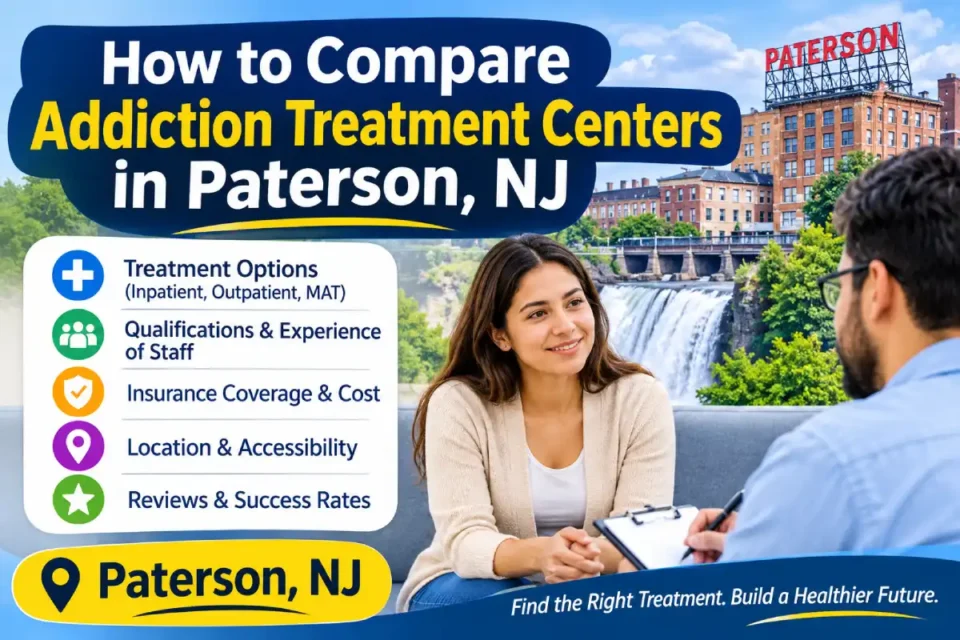
If you are comparing addiction treatment centers Paterson NJ residents can reach, a few key questions will help you separate strong programs from ones that only look good online.
Table of Contents
Check licensing and accreditation
In New Jersey, substance use disorder treatment programs must be licensed by the state. Ask any program for its license and the levels of care it is approved to provide. Accreditation from The Joint Commission or CARF is another sign that a program meets recognized standards for safety and quality.
A program that is vague about licensing, or will not tell you who its clinical staff are, is a red flag.
You can also ask how long the program has been operating and how its clinical team is supervised.
Look at the levels of care offered
Addiction treatment is not one-size-fits-all. Different people need different levels of support, and most people move through more than one level over time. Common options include:
- Detox, either on site or through a coordinated placement
- Partial hospitalization (PHP), with full days of treatment while living at home or in sober housing
- Intensive outpatient (IOP), with several sessions a week that fit around work or family
- Outpatient therapy for ongoing support and relapse prevention
Programs that offer several levels, or work closely with partners for the ones they do not provide, make transitions smoother and reduce the risk of falling through the cracks. Ask how the program decides when someone is ready to move from one level to the next.
Ask about co-occurring mental health care
Many people living with addiction also struggle with depression, anxiety, trauma, or another mental health condition. When those issues go untreated, relapse becomes more likely. Ask whether the program offers integrated dual diagnosis treatment, with licensed clinicians who can address both at the same time.
Consider location and travel time
Staying close to home can make it easier to keep up with treatment, involve family, and transition back to daily life. For Paterson residents, programs in nearby Morris, Essex, and Passaic counties are often within a reasonable drive. Better Life Recovery, for example, provides outpatient addiction and mental health treatment in Florham Park and serves people throughout North Jersey, including the Paterson area.
Understand the treatment approach
Strong programs can clearly explain how they treat addiction. Questions worth asking include:
- Which evidence-based therapies do you use, such as CBT or DBT?
- Do you offer or coordinate medication for opioid or alcohol use disorder?
- How often will I meet with a therapist one-on-one?
- Do you offer family therapy or education for loved ones?
- How do you build a treatment plan, and how often is it updated?
Medication for opioid use disorder deserves special attention in North Jersey, where fentanyl has made opioid use far more dangerous. Medications such as buprenorphine and naltrexone can reduce cravings and lower the risk of overdose. A program that supports these medications, either directly or through a trusted partner, gives people more tools for staying safe.
Verify insurance and costs up front
Most New Jersey programs accept a range of commercial insurance plans, and some work with Medicaid. Ask the admissions team to verify your benefits, explain what is covered at each level of care, and estimate your out-of-pocket costs before you start. Clear answers now prevent surprises later.
Why local treatment helps families
Addiction affects everyone in a household. Choosing a program within driving distance makes it easier for family members to join therapy sessions, attend education nights, and stay connected during treatment. It also means the person in recovery can practice new skills in their real environment and bring challenges back to their therapist while support is still close by.
Watch for red flags
- Promises of guaranteed results or a cure
- Offers of free travel, housing, or gifts in exchange for enrolling
- Pressure to commit immediately without answering your questions
- No clear plan for aftercare or step-down care
Plan for life after treatment
Recovery continues long after a program ends. Ask about relapse prevention planning, alumni groups, sober living referrals, and connections to local support meetings. In the Paterson area, community resources such as 12-step meetings and peer recovery groups can be an important part of long-term support. Ask, too, how the program stays in touch after discharge, whether through check-in calls, alumni events, or continuing care groups.
What the first call should feel like
The first conversation with a program tells you a lot. A good admissions team will listen to your situation, ask thoughtful questions, explain your options clearly, and help you figure out the right level of care, even if that means referring you somewhere else. If you feel rushed or pressured, keep looking.
Questions families often ask
What if my loved one does not want treatment? Many people are ambivalent at first. Families can still learn about addiction, set healthy boundaries, and talk with a treatment provider about how to start the conversation.
Can someone keep working during treatment? Often, yes. Intensive outpatient and outpatient programs are designed to fit around work or school.
How long does treatment last? It depends on the person, but most people benefit from several weeks to a few months of structured care, followed by ongoing support.
Taking the next step
Comparing treatment centers can feel like a lot when you or someone you love is struggling. Focus on licensing, levels of care, mental health support, and aftercare, and trust how each program makes you feel when you call. The right program will make the path forward clearer. If someone is in immediate danger, call 911, or call or text 988 for crisis support.
Also Read: Why Stroke Rates Are Rising in Young Adults – Risk Factors & Prevention