Most of us picture a stroke as something that happens to grandparents. Someone in their 70s, maybe with years of BP tablets behind them.
So when a 34-year-old software engineer wakes up and can’t lift his coffee mug properly, the first thought usually isn’t “stroke.” It’s “I slept on my arm wrong.” Or “I’m just tired.”
That assumption is exactly the problem. Strokes are showing up in people in their 20s, 30s and 40s far more often than they used to. In India, young adults are estimated to account for roughly 10-15% of all strokes.
Table of Contents
First, What Is a Stroke?
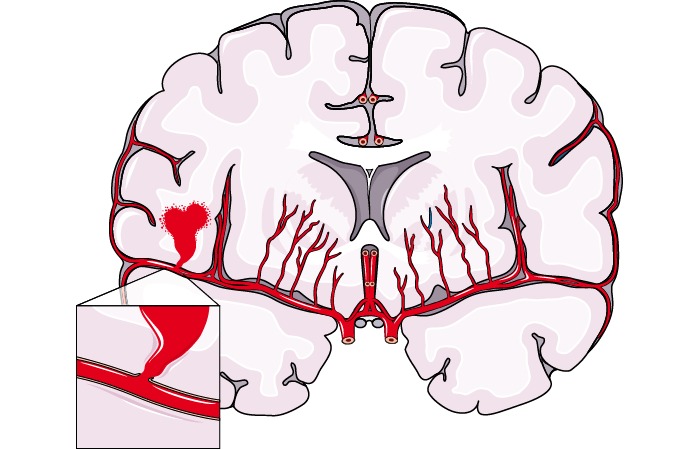
Think of your brain as a city that runs entirely on a constant supply of fuel, delivered through blood vessels. A stroke happens when that supply is suddenly cut off to one area.
There are two main kinds:
- Ischaemic stroke: a clot blocks a blood vessel in the brain (the most common type)
- Haemorrhagic stroke: a weak blood vessel bursts and bleeds into the brain
Either way, brain cells in that area start dying within minutes. And unlike a cut on your hand, brain tissue doesn’t really heal back the way it was.
Why Are Young Adults Getting Strokes Now?
There isn’t one villain here. It’s more like a slow pile-up of habits and conditions that used to show up at 55 and now arrive at 35.
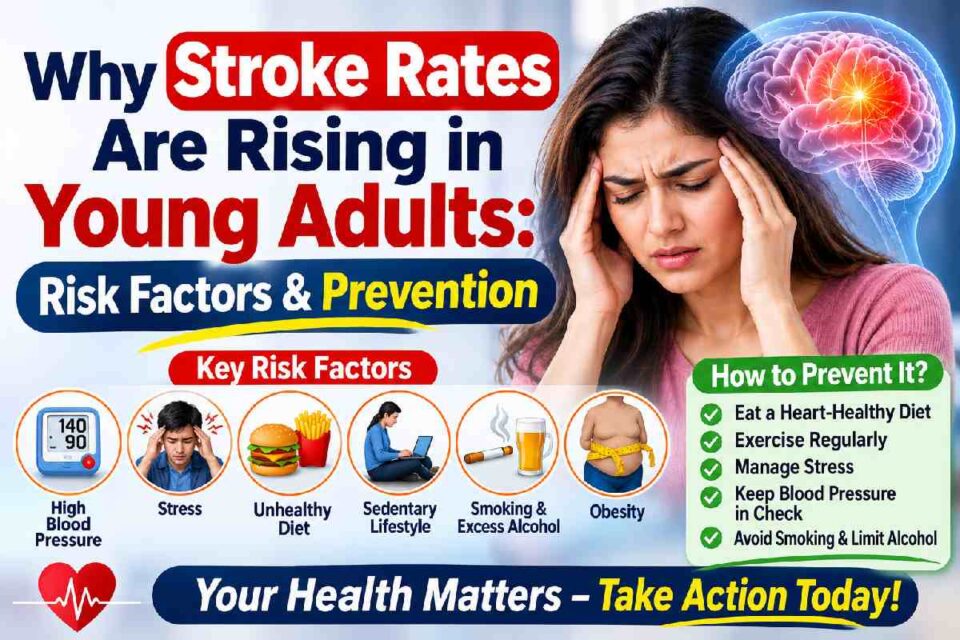
High blood pressure that nobody’s checking
This is the big one. Uncontrolled BP slowly damages blood vessel walls, making them stiff, narrow and more likely to block or burst. The catch? It rarely causes symptoms. Plenty of people in their 30s have never had their BP measured outside a pre-job medical.
Diabetes, often undiagnosed
High sugar levels damage blood vessels over time, and diabetes in India is appearing younger every year. Many people only find out after something serious happens.
Smoking, vaping and tobacco
Smoking thickens the blood and damages artery walls, so clots form more easily. Gutka and chewing tobacco aren’t safer alternatives, either. And for young women, smoking combined with oral contraceptive pills raises stroke risk noticeably.
Stress that never switches off
Long work hours, deadlines, EMIs, constant notifications… chronic stress keeps your body in “alert mode,” pushing BP up. It also nudges people towards smoking, junk food and drinking to cope.
Sitting all day
Desk job, car or metro commute, then the sofa at night. A sedentary routine feeds weight gain, high cholesterol, diabetes and high BP, all of which feed into stroke risk.
Poor sleep
Sleeping five hours and calling it “fine” takes a toll. Long-term sleep deprivation is linked to higher BP. Sleep apnoea, where breathing repeatedly stops during sleep (often with loud snoring), is a strong and frequently missed stroke risk factor.
A few other causes matter more in younger people too: heavy alcohol use, recreational drugs, migraine with aura, certain heart conditions, and blood clotting disorders. Sometimes there’s no obvious lifestyle reason at all, which is why a young stroke patient usually needs a thorough check-up afterwards.
Warning Signs: Remember FAST
A stroke usually comes on suddenly. The easiest way to spot it is the FAST test:
- F – Face drooping: Ask the person to smile. Does one side of the face droop?
- A – Arm weakness: Ask them to raise both arms. Does one drift down?
- S – Speech difficulty: Is their speech slurred, strange, or hard to understand?
- T – Time to call for help: If you notice any of these, call an ambulance immediately.
Some doctors also add B (sudden loss of balance) and E (sudden blurred or lost vision), making it BE FAST. A sudden, severe headache, unlike anything before, is another red flag.
And here’s something people often get wrong: symptoms that come and go still count. A short episode that fixes itself in 10 minutes may be a “mini-stroke” (TIA), which is often a warning that a bigger one is coming. Please don’t sleep it off.
Why Reaching Hospital Quickly Matters So Much
With a stroke, time is brain. During a stroke, an estimated 1.9 million brain cells can be lost every minute.
For clot-related strokes, a clot-dissolving injection generally works only within about 4.5 hours of symptoms starting, and the earlier it’s given, the better the outcome. In some cases, doctors can physically remove a large clot with a procedure called thrombectomy, but that also depends on getting to the right hospital fast.
So if you suspect a stroke:
- Call 112 (or 108/102 for an ambulance) straight away.
- Note the time symptoms started, or when the person was last seen normal. Doctors will ask.
- Go to a hospital with a CT/MRI scan and a stroke team available 24/7. A small clinic often has to refer you on, and that costs precious time.
- Don’t give food, water or medicines, not even aspirin. If the stroke is a bleed, aspirin can make it worse, and only a scan can tell the difference.
You can read more about how brain stroke treatment works at CKB Hospital, from the first scan to recovery and rehab.
Prevention: Small Things That Actually Add Up
The encouraging part? Most strokes in young adults are linked to risk factors you can control. Neurologists like Dr. K. K. Jindal and Dr. Shreya Verma often point out that prevention usually starts with simply knowing your numbers.
- Check your BP and sugar at least once a year, more often if it runs in the family. Aim to keep BP under 130/80 unless your doctor advises otherwise.
- Quit tobacco in every form. Your stroke risk starts dropping soon after you stop.
- Move every day. A brisk 30-minute walk on most days does more than an occasional intense gym session.
- Eat simpler. Less salt, fewer packaged snacks and fried food, more dal, vegetables, fruit and whole grains.
- Protect your sleep. Seven to eight hours, and get loud snoring checked.
- Limit alcohol and avoid recreational drugs completely.
- Manage stress in a way that works for you, whether it’s a walk after dinner, yoga, or simply logging off on time.
If you’ve had a mini stroke, have a strong family history, or live with high BP or diabetes, it’s worth getting a proper assessment from experienced neurologists in Delhi before anything happens.
Being young doesn’t make you stroke-proof. But most of the damage builds slowly, which means you can stop it early.
Check your numbers. Learn FAST. And if those signs ever show up, in you or anyone around you, don’t wait to see if they pass. Call for help and get to the hospital.
Also Read: How to Evaluate a Skin Care Clinic in Bangalore: A Dermatologist-Backed Guide for Every Skin Concern