
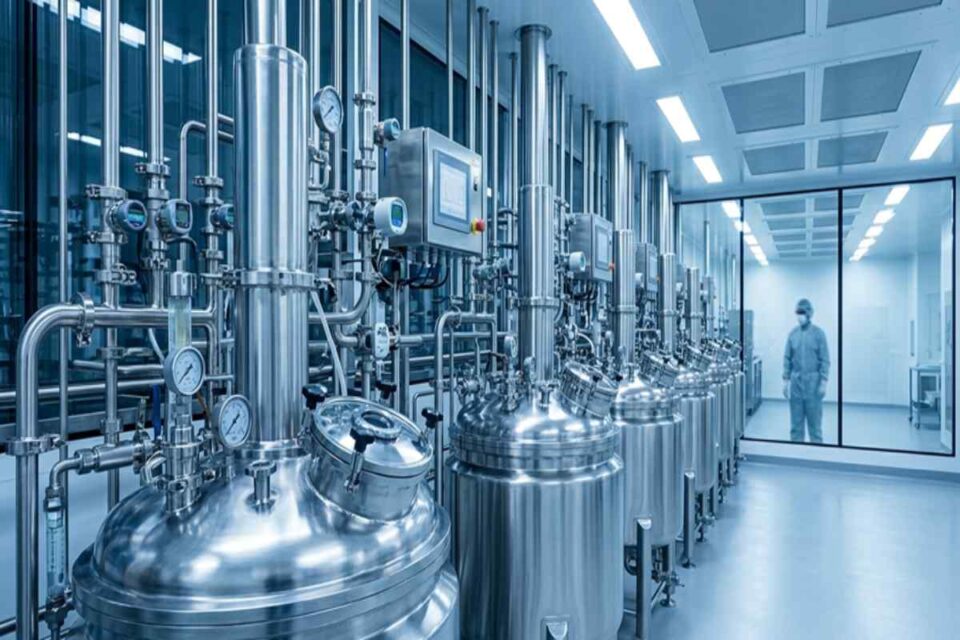
Patent cliffs are dismantling biologic monopolies, expanding patient access, and creating one of the most technically demanding manufacturing opportunities in modern healthcare. Aldo Vidinha explains why the next decade belongs to the organizations that master analytical science, regulatory depth, and GMP execution at scale.
For most of the past three decades, the world’s most powerful medicines lived behind extraordinary walls of intellectual property. Biologic drugs, complex protein-based therapies derived from living cells, transformed the treatment of cancer, autoimmune disease, diabetes, and rare conditions. They also generated unprecedented revenues for the companies that developed them, with individual products clearing annual sales of more than 20 billion dollars.
That era of exclusive control is ending. As patents protecting the world’s highest-earning biologics expire, a wave analysts call the biologic patent cliff, biosimilars are entering markets at scale. Aldo Vidinha, a senior technical operations consultant who has led GMP commissioning and validation programs on four continents, frames the moment plainly: this is not a commercial event. It is a structural transformation of pharmaceutical economics, manufacturing strategy, and healthcare access that will accelerate dramatically through 2030.
| $500B+
BIOSIMILAR MARKET BY 2030 |
30 to 80%
PRICE REDUCTION VS ORIGINATOR |
$180B
REVENUES FACING EXPIRY |
700+
CANDIDATES IN DEVELOPMENT |
Understanding what biosimilars are, why they differ structurally from generic drugs, and what their commercial explosion means for manufacturing, regulators, and health systems is no longer optional for industry professionals. According to Vidinha, it is essential.
01 · THE FUNDAMENTALS
Table of Contents
Why Biosimilars Are Not Generic Drugs
A biosimilar is a biological medicine highly similar to an already-approved reference biologic, the originator, in terms of safety, purity, and potency. Unlike small-molecule generics, which are chemically identical copies, biosimilars cannot be exact replicas. Biologics are produced in living cell systems, and the inherent variability of biological manufacturing means even the originator product itself shifts slightly from batch to batch.
That distinction makes biosimilar development and manufacturing one of the most technically demanding disciplines in modern pharmaceutical science. It requires sophisticated analytical characterization, robust process development, and a level of GMP manufacturing expertise that creates significant barriers to entry and meaningful competitive differentiation for those who master it.
| “Biosimilars are not generic drugs. They are highly complex biological medicines requiring advanced manufacturing science, rigorous analytical comparability, and a regulatory dossier that can take a decade to build.”
Aldo Vidinha |
To earn approval, a biosimilar developer must demonstrate biosimilarity, meaning no clinically meaningful differences from the originator in safety, purity, and efficacy. The dossier follows a totality of evidence approach: exhaustive analytical studies, pharmacokinetic and pharmacodynamic comparisons, and clinical data packages that satisfy the FDA, the EMA, and other major global regulators.
02 · THE PATENT CLIFF
A $180 Billion Wave Is Already in Motion
The scale of what is coming is difficult to overstate. Medicines now losing patent protection include some of the most commercially dominant drugs in pharmaceutical history. Adalimumab (Humira), etanercept (Enbrel), bevacizumab (Avastin), trastuzumab (Herceptin), rituximab (Rituxan), and infliximab (Remicade) collectively generated hundreds of billions of dollars in revenue under exclusivity.
With protection gone or expiring across major markets, biosimilar competition is now transforming the economics of these therapeutic categories at extraordinary speed. More than 20 biosimilar versions of adalimumab have entered the United States market since 2023, creating one of the most competitive pharmaceutical market events in history and driving price reductions that are already saving the US healthcare system billions of dollars annually.
The next generation of expirations, covering newer monoclonal antibodies, fusion proteins, and second-generation biologics, will extend this wave well into the 2030s. Vidinha notes that analysts now estimate over 180 billion dollars in biologic revenues will face biosimilar competition before the end of this decade.
03 · REGULATORY LANDSCAPE
FDA, EMA, and the Frameworks Shaping Strategy
Biosimilar regulation has matured significantly since the first frameworks were established, but meaningful differences between major jurisdictions continue to shape development strategy, market sequencing, and commercial timelines.
| REGULATOR | FRAMEWORK | KEY FEATURE | INTERCHANGEABILITY |
| FDA (USA) | BPCIA | Interchangeability designation allowing pharmacy substitution | Formal designation pathway |
| EMA (Europe) | EMA Biosimilar Guidelines, revised | Extrapolation across indications and robust comparability | Left to member state discretion |
| ANVISA (Brazil) | RDC 204/2017 | Comparative and individual development pathways | Not formally defined |
| CDSCO (India) | Similar Biologics Guidelines 2016 | Abbreviated pathway with local clinical data requirement | Not applicable |
The FDA’s interchangeability designation, which allows a biosimilar to be substituted at the pharmacy level without prescriber intervention much like a small-molecule generic, has become a significant commercial differentiator in the US market and a primary strategic objective for leading biosimilar developers.
In Europe, the EMA has built the most permissive and scientifically advanced extrapolation framework, allowing a biosimilar approved in one indication to be used across all indications of the reference product when the scientific rationale is robust. That approach has accelerated European biosimilar market penetration and serves as a model for regulatory evolution globally.
04 · MANUFACTURING COMPLEXITY
Inside the Hardest Problem in Industrial Pharma
The most common misconception about biosimilars is that they are pharmaceutical commodities, lower-cost copies any sufficiently equipped manufacturer can produce. Vidinha calls the reality precisely the opposite. Biosimilar manufacturing is among the most technically demanding, capital-intensive, and quality-critical processes in industrial pharmaceutical production.
The challenge begins at the molecular level. Biologics are large, structurally complex molecules: glycoproteins, fusion proteins, monoclonal antibodies, whose therapeutic activity depends on precise three-dimensional folding, glycosylation patterns, and post-translational modifications. Replicating that molecular profile with sufficient fidelity to demonstrate biosimilarity requires:
- Advanced cell line development and extensive master cell bank characterization.
- Highly controlled upstream bioreactor processes with stringent environmental and nutrient controls.
- Multi-step downstream purification trains with chromatography, filtration, and viral inactivation.
- State-of-the-art analytical characterization including mass spectrometry, NMR, and advanced glycan analysis.
- Robust comparability protocols linking manufacturing process changes to product quality attributes.
- GMP facilities designed and qualified to the highest regulatory standards.
- Cold-chain distribution infrastructure that maintains product integrity from fill-finish to patient.
| “Biosimilar manufacturing is not a cost-reduction exercise. It is a precision engineering challenge requiring world-class facilities, analytical capability, and GMP excellence that few organizations in the world can credibly deliver.”
Aldo Vidinha |
The capital requirements reflect that complexity. A purpose-built biologics manufacturing facility capable of supporting biosimilar commercial production typically requires investment in the range of 200 million to 800 million dollars depending on scale, modality, and geography. Even cell and gene therapy adjacent products demand highly specialized infrastructure with unique contamination control, closed system, and process validation requirements.
05 · COMPETITIVE LANDSCAPE
Winners, Challengers, and the Capability Race
The biosimilar competitive landscape is consolidating rapidly around a small number of highly capable global players, alongside a growing cohort of Asian manufacturers, particularly from South Korea and India, who have built world-class biologic manufacturing infrastructure at competitive cost structures.
The leading developers operating at global scale include Amgen, Samsung Bioepis, Celltrion, Sandoz (now Hexal), Pfizer, Fresenius Kabi, Teva, Viatris, and a rapidly expanding group of Indian players including Biocon and Dr. Reddy’s Laboratories. Each has invested heavily in manufacturing scale, regulatory expertise, and commercial infrastructure to compete across multiple markets and therapeutic categories at the same time.
South Korea has emerged as a particular standout. Samsung Biologics, now one of the world’s largest contract biologic manufacturers by capacity, and Celltrion have both built global reputations for biosimilar development and manufacturing quality, achieving major approvals across the FDA, EMA, and other jurisdictions. Korea’s success reflects a deliberate national strategy to invest in biopharmaceutical infrastructure, talent, and regulatory alignment with Western standards.
| “The biosimilar race is not only a commercial competition. It is a capability competition. The organizations that win long-term are those that build superior analytical science, reproducible manufacturing processes, deep regulatory relationships, and the clinical and commercial infrastructure to enter multiple markets simultaneously.”
Aldo Vidinha |
06 · HEALTHCARE IMPACT
Why This Matters Beyond the Boardroom
Beyond the commercial narrative, biosimilars carry profound humanitarian significance. The biologics they replicate include treatments for rheumatoid arthritis, multiple sclerosis, Crohn’s disease, psoriasis, breast cancer, colorectal cancer, and a range of rare diseases. In most of the world, these treatments have remained financially inaccessible to the majority of patients who need them.
Biosimilar competition changes that equation. Price reductions of 30 to 80 percent observed in competitive European markets translate directly into expanded patient access, reduced healthcare system expenditure, and reallocation of savings toward other clinical priorities. In the United States, where biologic drug pricing has reached extraordinary levels, the economic impact of biosimilar competition over the coming decade is projected to save hundreds of billions of dollars.
For healthcare systems operating under fiscal pressure across Europe, Latin America, Asia, and Africa, biosimilars are not merely a purchasing option. They are a strategic necessity. National health authorities, hospital formulary committees, and payer organizations are increasingly mandating biosimilar use where clinically appropriate, accelerating uptake and market share transition beyond what purely market-driven dynamics would achieve.
07 · GMP AND ENGINEERING OPPORTUNITY
What This Means for the Wider Industry
Aldo Vidinha sees the biosimilar boom as one of the most significant commercial opportunities of the coming decade for pharmaceutical engineers, validation specialists, GMP compliance professionals, and life sciences technology providers.
Every new biosimilar manufacturing facility requires comprehensive qualification and validation programs, from design qualification through process performance qualification, executed to the highest GMP standards and in alignment with FDA, EMA, and ICH guidelines. The complexity of biologic manufacturing processes means commissioning, qualification, and validation for a single biologics facility can span years and require deep specialist expertise across multiple technical domains. Key areas in high demand include process validation for upstream bioreactor and downstream purification operations, cleaning validation for multi-product facilities, computer system validation, contamination control strategy, analytical method validation, regulatory submission support, and cold-chain qualification.
Organizations that combine GMP engineering excellence with deep regulatory knowledge and digital manufacturing capability, particularly in biologics and sterile manufacturing, will be exceptionally well positioned as the biosimilar buildout accelerates globally. The demand for this expertise is structural, not cyclical, and it will intensify as the next wave of biologic patent expirations arrives.
CONCLUSION
The Revolution Is Already Here
Biosimilars are not a niche story. They are one of the defining forces reshaping global pharmaceutical economics, healthcare access, and manufacturing strategy for the next decade. The patent cliff is real, the commercial opportunity is enormous, and the technical barriers are high enough that genuine capability in development, manufacturing, regulatory science, and GMP execution will determine who wins. The message from Vidinha is direct: the question is not whether to engage with the biosimilar revolution, but how quickly and how well.
Aldo Vidinha · Senior Technical Operations Consultant
Aldo Vidinha is an internationally experienced pharmaceutical industry leader with more than 18 years of expertise in Engineering, Validation and Qualification, GMP Compliance, Quality Assurance, and Manufacturing. He has led the construction, start-up, commissioning, qualification, and validation of pharmaceutical manufacturing facilities across Europe, the United States, Australia, and China. Connect at www.aldovidinha.com.