
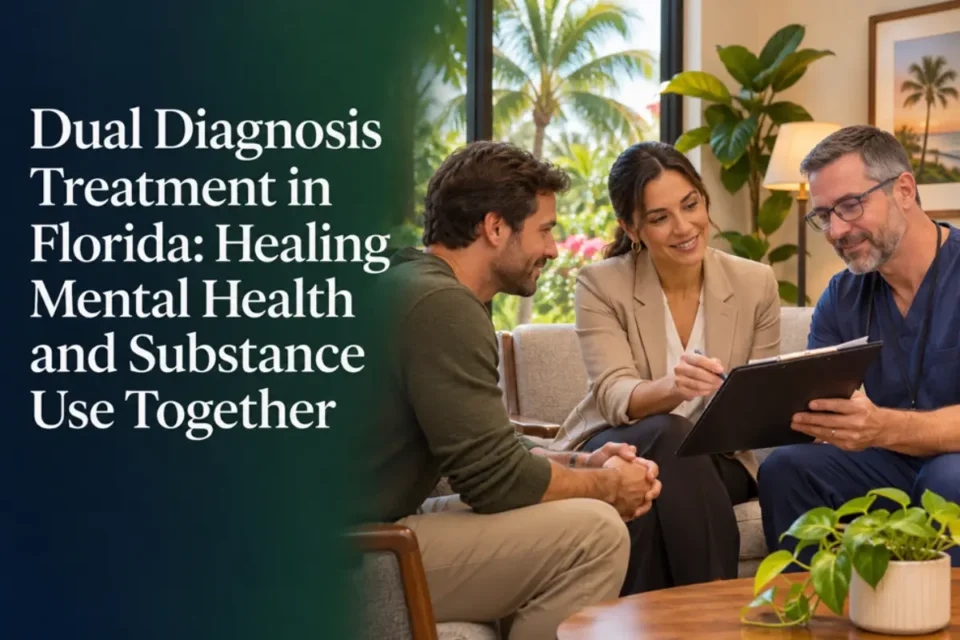
For many people, mental health struggles and substance use are deeply connected. Someone may drink to quiet anxiety, use stimulants to push through depression, or rely on pills to sleep after trauma. Over time, the substance use and the mental health condition feed each other, making both harder to escape.
Dual diagnosis treatment Florida programs provide is designed to break that cycle by addressing both conditions at the same time, with one plan and one team.
Table of Contents
Understanding dual diagnosis
A dual diagnosis, also called co-occurring disorders, means a person has both a mental health condition and a substance use disorder. Common examples include depression and alcohol use, anxiety and benzodiazepine misuse, PTSD and opioid use, or bipolar disorder and stimulant use. National survey data from SAMHSA shows that millions of American adults live with both.
Why treating both together matters
When only one condition is treated, the other often pulls people back. Someone who stops drinking but still has untreated anxiety may return to alcohol to cope. Someone treated for depression who continues to use substances may not see their mood improve. Integrated treatment looks at the whole picture and helps people understand how their symptoms and substance use are connected.
For military members, veterans, and eligible family members dealing with co-occurring conditions, insurance coverage can be an important part of accessing appropriate care. This guide to rehabs that take TRICARE explains how beneficiaries can explore covered substance use treatment options and understand the referral and authorization process.
Signs you may be dealing with a dual diagnosis
- You use alcohol or drugs to manage anxiety, sadness, or stress
- Mental health symptoms get worse when you try to cut back
- Past treatment for one condition did not seem to last
- Mood changes and substance use seem to feed each other
Stress can sometimes intensify both mental health symptoms and substance use triggers, making healthy coping strategies an important part of recovery. Exploring practical stress management techniques can help people understand ways to manage everyday pressure alongside professional treatment.
Why residential care can help
For many people with co-occurring disorders, a residential setting offers important advantages:
- Distance from triggers, substances, and stressful environments
- Around-the-clock support during early recovery
- Daily therapy that builds momentum quickly
- Close monitoring of mental health symptoms and medications
- A structured routine that supports sleep, nutrition, and stability
A peaceful setting can make it easier to do this difficult work. Palm City Wellness provides residential dual diagnosis care in Palm City on Florida’s Treasure Coast, where adults can address mental health and substance use challenges together in a private, supportive environment.
What treatment includes
- A thorough assessment of both mental health and substance use
- Individual therapy using CBT, DBT skills, and trauma-informed approaches
- Group therapy focused on coping skills and relapse prevention
- Psychiatric care and medication management
- Family therapy and education
- Wellness activities that support physical and emotional health
The role of medication
Medication can play a role in treating both sides of a dual diagnosis. Psychiatric medications may help with depression, anxiety, or mood symptoms, while medications for opioid or alcohol use disorder can reduce cravings. In integrated care, providers consider both at once, which helps avoid interactions and makes sure each medication supports recovery.
A typical day in residential dual diagnosis care
Mornings often begin with breakfast and a group check-in. The day may include individual therapy, groups on relapse prevention or emotional regulation, psychiatric appointments, and wellness activities. Evenings may include support meetings, reflection, or quiet time. The steady structure helps people rebuild routines while working on both conditions.
Common myths about dual diagnosis
- “You have to get sober before treating mental health.” Integrated care treats both at the same time.
- “Medication for mental health means you are not really in recovery.” Appropriate psychiatric medication can support recovery.
- “Relapse means treatment failed.” Setbacks can happen and can be part of learning what works.
Before residential treatment: detox
Some people need medical detox before they can safely begin residential treatment, especially after heavy use of alcohol, benzodiazepines, or opioids. A good program will assess withdrawal risk and help coordinate detox if needed.
Why honesty matters in treatment
Many people with a dual diagnosis feel shame about their substance use or mental health symptoms. But treatment works best when people can be open about what they are experiencing. A respectful, nonjudgmental team makes that honesty easier, and it allows the care plan to address what is really going on rather than only part of the picture.
Why people travel to Florida for treatment
Florida has long been a destination for treatment. Many people find that a change of scenery helps them focus. The Treasure Coast, in particular, offers a quieter setting than larger cities, with natural surroundings that support rest and reflection. If you are traveling for care, ask how the program helps with transportation and how family can stay involved from a distance. Florida also has a large recovery community, which can be a source of connection for people who choose to stay in the area after treatment.
Planning for life after treatment
Recovery from co-occurring disorders continues long after a residential stay. Strong programs start discharge planning early, connecting people with outpatient therapy, psychiatric care, support groups, and relapse prevention resources near home.
For people who need continued structured support after residential treatment but do not require round-the-clock care, a partial hospitalization program may be an option. Learn more about a partial hospitalization program in New Jersey and how this level of care can support the transition toward outpatient recovery.
How families can help
Families often feel unsure how to support someone with a dual diagnosis. Learning about both conditions, joining family sessions, setting healthy boundaries, and caring for your own well-being can all help. Recovery is often stronger when families are part of the process.
Questions to ask a dual diagnosis program
- How do you assess and treat both conditions together?
- Who provides psychiatric care?
- Do you coordinate detox if it is needed?
- How do you involve families?
- What does aftercare look like?
A path forward
Living with both a mental health condition and substance use can feel exhausting, especially if past treatment did not last. Integrated care offers a real chance to understand what drives the cycle and build tools to break it. If you or someone you love is in crisis or thinking about suicide, call or text 988 to reach the 988 Suicide & Crisis Lifeline, or call 911.