
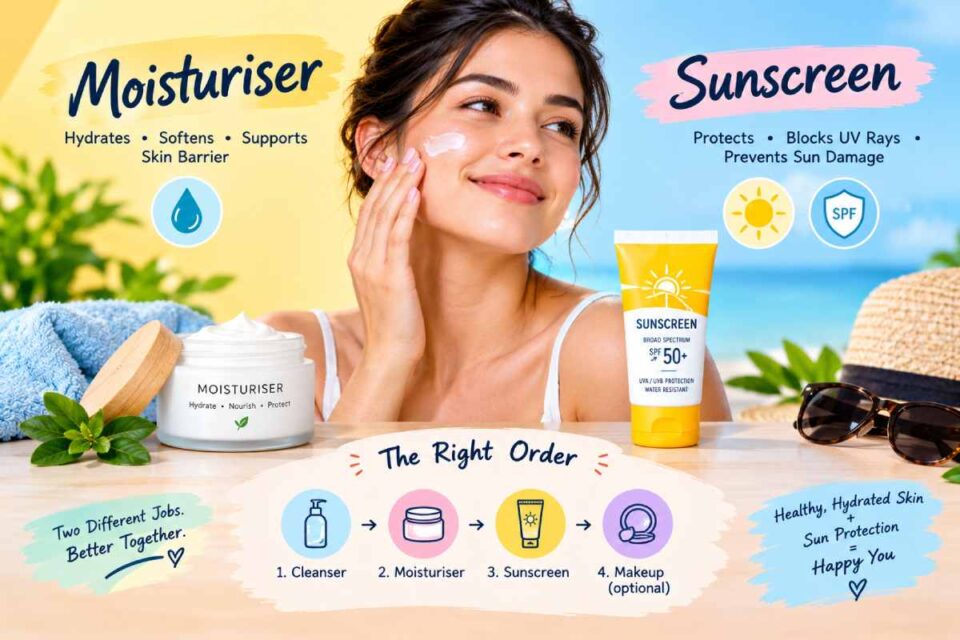
Moisturiser and sunscreen can look similar in a jar or tube, but they have different jobs. A moisturiser helps keep skin hydrated and comfortable. Sunscreen helps protect it from ultraviolet radiation. Some products combine both functions, which is why the labels can become confusing.
You do not need a long morning routine to use them well. The useful questions are whether your skin needs extra moisture, what protection your sunscreen offers and how the two formulas feel together. Once you understand those details, it becomes easier to choose your products and put them on in a sensible order.
Table of Contents
What a Moisturiser Does
A moisturiser helps maintain hydration and reduce moisture loss. Depending on its ingredients, it may attract water, soften the skin or help support its protective barrier.
If you are choosing a natural face moisturiser, consider the complete formula and texture. A light lotion may feel comfortable on one person, while someone with dry skin may prefer a richer cream.
You can use a suitable moisturiser in the morning and evening. Oily skin can also need moisturising; a greasy feeling does not mean that every moisturiser is unsuitable.
Unless the product has a labelled SPF and appropriate sun protection claims, use it for hydration. Familiar plant oils or botanical ingredients alone do not establish its sunscreen protection.
What Sunscreen Adds to Your Routine
Sunscreen uses UV filters to help protect skin from the sun. Broad spectrum protection covers UVA and UVB radiation. SPF mainly describes protection against sunburn, which is largely associated with UVB exposure.
When comparing natural sunscreen for face care, look for the protection details on the label rather than relying on the word natural. Dermatologists recommend broad spectrum SPF 30 or higher and water resistance.
A sunscreen may also contain moisturising ingredients. That can make it comfortable to wear, but hydration and UV protection remain separate functions to check.
Choose something you can apply generously and keep using. A formula that feels pleasant only when applied very sparingly may not be a practical match. Sunscreen works alongside shade, clothing, a hat and sunglasses when you spend time outside.
Apply Moisturiser Before a Separate Sunscreen
If you use separate products, a straightforward morning order is cleanser, moisturiser, sunscreen and then makeup if desired. Follow your clinician’s instructions for any prescribed treatment in that routine.
Apply moisturiser after cleansing, while your skin is still slightly damp if that suits its directions. Let it settle and allow the surface to dry before applying sunscreen as instructed.
There is no universal waiting time between moisturiser and sunscreen. Check the product directions and allow enough time that applying the next layer does not smear everything together.
Keep the products as separate layers. Mixing sunscreen into moisturiser in your palm changes the original formula and may make coverage less reliable. Use each product according to its own instructions.
Can One Product Do Both Jobs
A moisturiser with suitable SPF can be a convenient option. Check for broad spectrum protection and SPF 30 or higher, and follow its application and reapplication instructions just as you would with sunscreen.
The amount matters. A small dab used mainly to soften the cheeks may not give the protection stated on the label across your whole face.
Likewise, a moisturising sunscreen may provide enough comfort without a separate cream underneath. If your skin feels adequately moisturised, you may not need both layers.
If it still feels dry, a suitable moisturiser can remain part of the routine. Judge the combination by comfort and correct sunscreen use, rather than assuming two products are always necessary.
Choose Textures That Work Together
Think about how your skin feels after cleansing and through the day. A lightweight moisturiser under a comfortable sunscreen may suit someone who dislikes richer textures. Dry skin may need more support from the moisturising layer.
When browsing Old School Rituals, compare the individual product descriptions, ingredient lists and protection labels. A collection name alone cannot tell you whether two particular formulas will suit your skin together.
If layers roll into small flakes, check whether you have used more moisturiser than needed or rubbed the products repeatedly. Let each layer settle and try a simpler combination.
Avoid solving heaviness by reducing sunscreen below its recommended amount. Choose a different texture instead. If you have known sensitivities, review ingredients and test unfamiliar products on a small area before broader use.
Use Enough and Remember Reapplication
Apply sunscreen generously and evenly to skin exposed to the sun. Follow the amount and method on the label, and remember areas such as your ears, neck and hairline where relevant.
Apply it before heading outside. Standard guidance recommends about fifteen minutes before sun exposure, alongside any specific instructions for the product.
When outdoors, reapply approximately every two hours and after swimming or sweating, following the label. Water resistance does not mean a product stays effective indefinitely in water.
A higher SPF does not remove the need for reapplication. Makeup with SPF also does not automatically replace a properly applied sunscreen layer.
Keep sunscreen accessible on days out and check the expiry and storage instructions. Protect the container from excessive heat rather than leaving it in a hot car or direct sunlight.
Pack enough for reapplication when planning a long day outside.
Keep the Routine Easy to Follow
Place your morning products together so the order becomes familiar. Give yourself enough time to apply sunscreen properly before leaving home instead of adding it hurriedly at the door.
In the evening, cleanse and use a suitable moisturiser as needed. Your sunscreen belongs in your daytime protection plan, while moisturising can remain part of both routines.
If a combination feels uncomfortable, change one product at a time. This makes it easier to work out which texture or ingredient is causing difficulty.
The aim is hydrated, comfortable skin alongside dependable sun protection. Choose products that perform those jobs clearly, and use them consistently according to their labels.
Also Read: Batch Cooking Nutrition: Smart Freezer Organization