
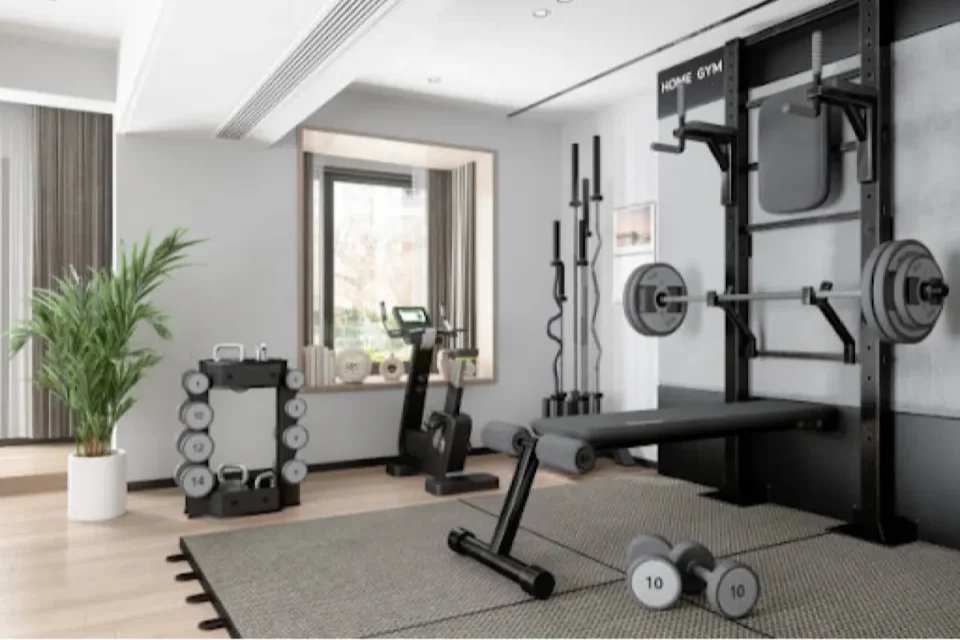
You want to work out at home, but your living room has other uses. Choosing compact home gym equipment means making every square foot count. Explore space-saving exercise equipment that suits your workouts, fits your budget and stores neatly when you’re done.
Table of Contents
Why Small-Space Workouts Still Need the Right Gear
In a small space, your equipment needs to support your workouts while leaving enough room to move. Choose gear that lets you work all your major muscle groups at least two days weekly, including your legs, hips, back, abdomen, chest, shoulders and arms.
Alongside strength work, aim for at least 150 minutes of moderate activity, such as brisk walking, each week, or an equivalent mix of moderate and vigorous activity. If you prefer walking outdoors, you might allocate your equipment budget to home strength training.
Focus on equipment that fits your space and is easy to use. These six checks can help you choose based on your needs rather than extra features or price alone.
1. Measure Clearance for Space-Saving Exercise Equipment
A machine may fit beside your sofa but leave too little room to move. Before buying space-saving exercise equipment, measure both the space it takes up and the room you’ll need to exercise:
- Floor length and width: Use low-tack painter’s tape to mark where the equipment will sit and how far your arms and legs will reach. Check this space against the manufacturer’s clearance instructions.
- Ceiling height: Check that you have enough clearance to reach overhead or to stand on a step platform. Keep your movements clear of lights and ceiling fans.
- Surrounding space: Leave the recommended space around every side of the equipment. Keep furniture out of your exercise area and leave doors and walkways clear.
- Delivery route: Check that the box will fit through doorways, hallways and stairwell turns. Find out whether you’ll assemble the equipment in the room or move it in fully built.
2. Check Stored Dimensions Before Buying
A foldable label tells you little about whether a piece will slide under your bed or tuck into a closet. Once you’ve checked the workout area, compare the equipment’s open and folded dimensions with the place you’ll keep it:
- In-use footprint: Use the official specification sheet to check the fully opened configuration, including attachments that extend beyond the base.
- Stored profile: Measure your closet or under-bed space against the full folded length, width and height. Include any protruding handles, wheels or angled supports.
- Storage position: Check which positions the manufacturer permits before planning to stand equipment upright or lean it against a wall.
3. Weigh the Frame Material for Easier Storage
Once you know where equipment will fit, consider how you’ll move it there after a workout. Aluminum weighs less than steel or iron, so frame material is worth checking alongside the product’s total weight.
If possible, ask for a demonstration of the complete move from workout position to storage. Pay attention to the handles and any lifting involved, then decide whether the process suits your abilities before and after a workout.
4. Choose Equipment That’s Quick to Set Up
Check how long it takes to get portable workout equipment out and put it away. Moving furniture and sharing a room can contribute to scheduling hurdles, so leave time for setup and cleanup when planning your sessions.
During a demonstration or manual review, consider how these features fit your home:
- Transport wheels: Check how the equipment rolls across your flooring, particularly where thresholds interrupt the route to storage.
- Folding joints: Look for tool-free adjustments with clearly explained locking pins, and confirm how you’ll check that each lock is engaged.
- Solo handling: If you’ll exercise alone, establish whether one person can manage setup and pack-away. Under five minutes can be your personal target rather than an assumed feature of every foldable product.
5. Prioritize Versatility Over Variety
Choose equipment that supports several exercises you want to do. Adjustable dumbbells, suspension trainers or pulley kits may suit your routine better than a machine built for just one exercise.
Look for a mix of tools that lets you squat, bend at the hips, push, pull and work your core. Check the instructions for supported exercises and any mounting requirements, since one piece may not cover everything. Before buying another item, ask what it adds to your workouts. Consider whether it offers enough resistance for your plans and whether it’s worth the extra cost and storage space.
6. Confirm the Manufacturer-Rated Capacity Before You Buy
Check what each weight limit includes. A maximum user weight is the maximum weight of the person using the equipment, while a resistance limit is the maximum weight used during exercise. If the product lists a combined limit, ask whether it includes your body weight and any weights you hold.
Read the specifications and manual for the limits that apply to your exercises, then follow the setup, locking and weight-limit instructions. Look for actual ratings rather than relying on labels such as commercial grade. Choose equipment that suits your current workouts and any planned increases in resistance.
Get the Most Workout Value Out of Every Square Foot
Measure your space and decide which exercises you want to do before shopping. Check how much room each item needs during workouts and in storage, along with its weight, setup time, exercise options and rated limits. Choose gear you’ll use regularly and keep a place for it, so your workout setup fits comfortably into everyday life.
Jack Shaw serves as the senior writer and fitness editor of the men’s lifestyle magazine Modded, bringing his expert opinions and insights on the importance of maintaining lifelong physical health. He has a deep knowledge of all things fitness and has had articles published with BarBend, Train Heroic and SportsEd TV, among others.