
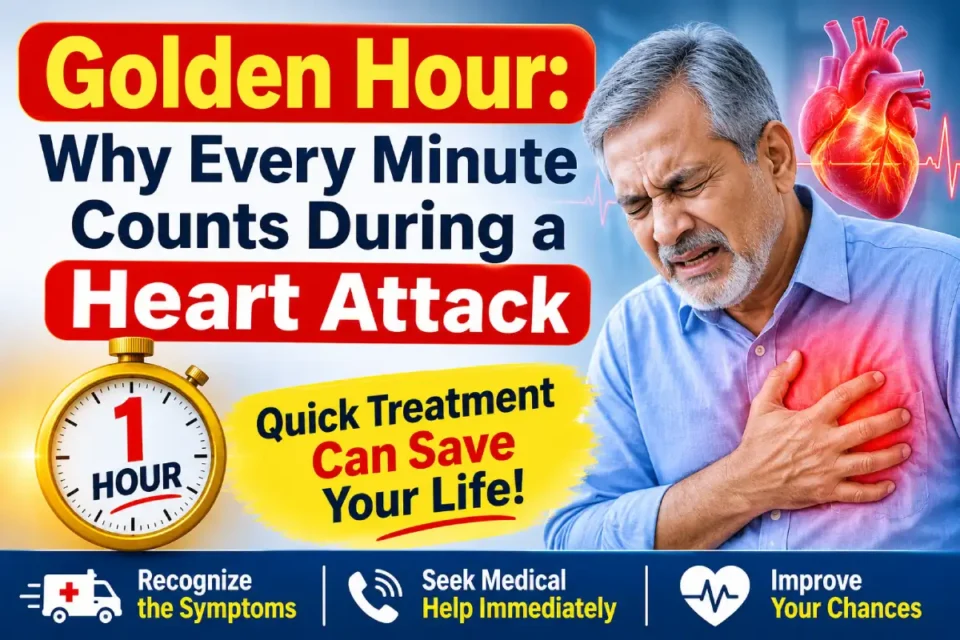
It usually starts with something small. A heaviness in the chest after dinner. Sweating that doesn’t make sense because the fan’s on. And most of us do the same thing: we wait. We take an antacid, lie down, and tell the family, “It’s just gas, I’ll be fine in a bit.”
That waiting is exactly what makes a heart attack so dangerous.
Doctors have a phrase for it: time is muscle. Every minute a heart attack goes untreated, a little more heart muscle dies. That’s why the first hour after symptoms begin is called the golden hour. What happens in that window can decide whether someone leaves the hospital with a healthy heart… or a badly weakened one.
Table of Contents
What Is the “Golden Hour” in a Heart Attack?
The golden hour is simply the first 60 minutes after heart attack symptoms start. It’s when treatment works best.
During a heart attack, blood flow to part of the heart gets blocked, and that section of muscle is suddenly starved of oxygen. Open the artery quickly and the muscle can recover. Leave it blocked, and it starts dying. Heart muscle begins to die roughly 80 to 90 minutes after losing its blood supply, and within about six hours most of the affected area can be permanently damaged.
So the golden hour isn’t a deadline where everything changes at minute 61. Think of it like ice melting in the sun. The sooner you move it into the shade, the more of it you save.
Why Does a Heart Attack Happen?
Your heart gets its own blood through the coronary arteries. Over years, fat and cholesterol build up inside them as plaque. Then one day a plaque cracks, a clot forms over it, and the artery is blocked. That’s the heart attack.
What quietly builds that plaque is mostly familiar:
- Diabetes and high blood pressure (very common in India, and often undiagnosed)
- Smoking or chewing tobacco
- High cholesterol
- Long-term stress, poor sleep and little physical activity
- A family history of early heart disease
And it’s no longer just a problem for people over 60. Heart attacks in people in their 30s and 40s aren’t rare anymore.
Early Warning Signs You Shouldn’t Ignore
- Chest pain or pressure: heaviness, tightness or squeezing in the centre of the chest, lasting more than a few minutes or coming and going
- Pain that spreads: to the left arm (sometimes both), jaw, neck, back or upper stomach
- Breathlessness: with or without chest pain
- Cold sweat: sudden sweating with clammy skin
- Nausea, light-headedness or unusual tiredness
Not everyone gets the “movie” version, though. Women, older adults and people with diabetes often have milder symptoms, like just breathlessness or fatigue.
Then there’s the “acidity” confusion, probably the most common reason people in India lose precious time. One Indian hospital study found most delays happened because patients didn’t recognise their symptoms at the start. If you’re not sure whether it’s gas or your heart, treat it as your heart. An unnecessary hospital visit beats a missed heart attack.
Why Delay Causes Damage You Can’t Undo
Heart muscle doesn’t grow back the way skin does. Once it dies, it’s replaced by scar tissue that can’t pump.
That’s why someone who reaches care late may survive but live with a weaker heart afterwards. Breathlessness on the stairs. Swollen feet. Tiredness that never quite lifts. This is heart failure, and much of it gets decided in those first few hours. There’s also a more immediate risk: the heart can slip into a dangerous irregular rhythm, which is why being near hospital monitoring matters.
Sadly, delay is common here. The average time for a heart attack patient in India to reach hospital has been reported at around six hours. And a community study by AIIMS and ICMR researchers linked about 55% of cardiac and stroke deaths to delays in seeking care. Many of them waited at home “to see if it settles.”
What to Do in the First Few Minutes
If you think you or someone near you is having a heart attack, don’t overthink it. Act.
- Call for emergency help right away. Dial 112, or 108/102 for an ambulance depending on your state. The team can start care on the way and alert the hospital in advance.
- Go to a hospital that can actually treat heart attacks. Ideally one with a cath lab and cardiologists available round the clock, so you aren’t referred onward. If an ambulance can’t come quickly, go by car, but never let the patient drive.
- Keep the person resting. Sit them half-upright and loosen tight clothing. No walking around, no stairs.
- Aspirin, if it’s safe. Chewing one regular aspirin (300-325 mg) can help, as long as the person isn’t allergic and hasn’t been told by a doctor to avoid it. If unsure, ask the emergency operator. Don’t give someone else’s prescription medicines.
- If they collapse and aren’t breathing normally, start CPR. Push hard and fast in the centre of the chest, about 100-120 times a minute, until help arrives.
What wastes time? Calling relatives to “discuss it first,” or stopping at a small clinic that can only refer you elsewhere.
What Happens at the Hospital
An ECG is usually the first test. It takes minutes and can confirm a heart attack, with blood tests following.
The main goal is to reopen the blocked artery, most often through angioplasty: a thin tube is guided to the blockage, a tiny balloon opens it, and a stent keeps it open. Sometimes clot-dissolving medicines are given first. You can learn more about the options for heart attack treatment in Delhi at CKB Hospital.
Experienced heart specialists like Dr Anshul Kumar and Dr Sanjeev Kumar Gupta often remind families of one simple thing: the earlier a patient arrives, the more heart muscle can be saved, and the smoother recovery tends to be.
The Real Head Start Is Prevention
The best heart attack is the one that never happens. If you have diabetes, high BP, high cholesterol, a smoking habit or a family history of heart disease, don’t wait for symptoms. A routine check-up with an ECG and lipid profile can catch trouble early, and consulting experienced cardiologists in Delhi NCR is a sensible first step.
One Last Thing
If you remember only one line from this article, make it this: never wait out chest pain. Call for help, get to the right hospital, and let the doctors decide whether it was “just gas.” Those minutes could protect a heart for a lifetime.
Disclaimer: This article is for general awareness and doesn’t replace medical advice. In an emergency, call 112 immediately.
Also Read: Why Stroke Rates Are Rising in Young Adults – Risk Factors & Prevention