
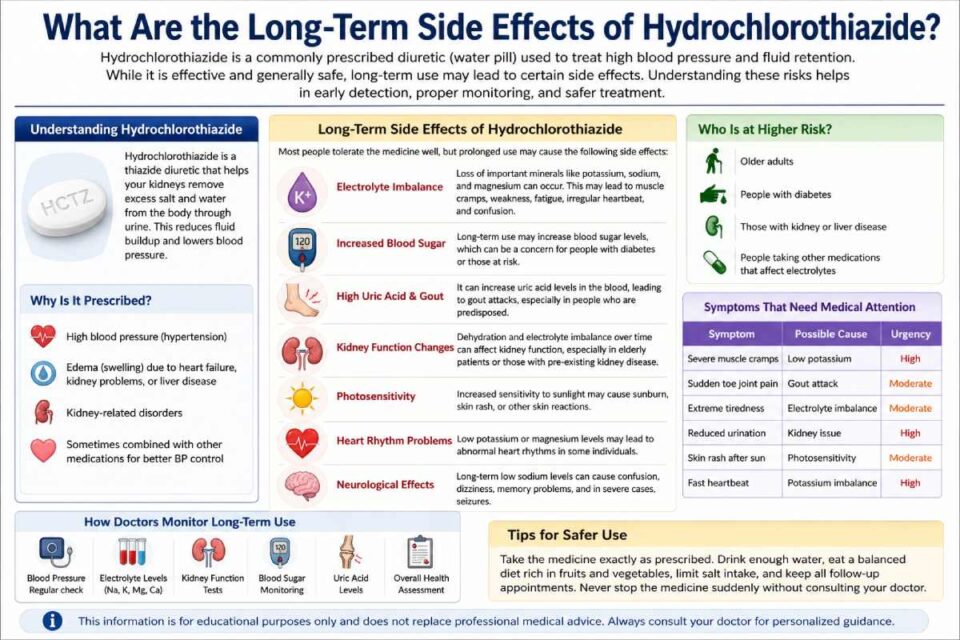
Many people agreed hydrochlorothiazide for high blood pressure or swelling often ask what are the long term side effects of hydrochlorothiazide (As this drug is mostly used for hypertension in India, the knowledge about long-term effect of this drug may be very useful for safe treatment)
Hydo-clor-thiazide, known as HCTZ, is a thiazide diureticor water pill that help rid the extra salt and water.It is highly given for hypertension, edema, and some heart-related conditions. While it works efficiently for BP control, long-term use may main to certain metabolic, kidney, and electrolyte-related problems.
According to medical references such as Mayo Clinic and Drugs.com, continued use may disturb uric acid, potassium levels, blood sugar, kidney function, cholesterol, and skin sensitivity to sunlight.
This article explains how long are the side effects of hydrochlorothiazide in terms of Indian patient‘s perspective and most searched health concern.
Table of Contents
Understanding Hydrochlorothiazide and Why Doctors Prescribe It
Hydrochlorothiazide belongs to the group where there is a medicines called the thiazide diuretics. It works by beginning the kidneys to eradicate more salt and water through the urine.
Doctors in India usually recommend it for:
High Blood Gravity (Hypertension)
It will reduces the strain of the heart and strains and lowers the risk of stroke and heart disease.
Swelling (Edema)
It is used for swelling and caused by kidney disease, liver disease, and heart failure.
Mixture Therapy
Many patients take this hydrochlorothiazide with medicines like losartan, telmisartan, and amlodipine.
While patients using it for months or years should monitor likely problems regularly.
What Are the Long-Term Side Effects of this Hydrochlorothiazide?
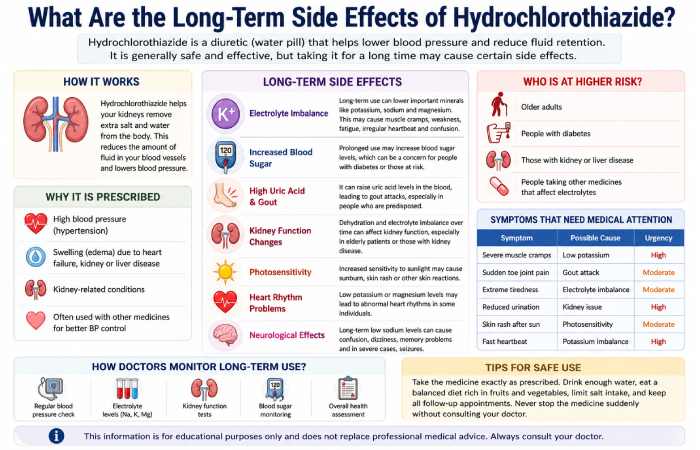
The most of the general question asked by people is: what are the long-term side effects of hydrochlorothiazide?
Let us understand the main ones.
Electrolyte Inequality and Low Potassium
Long-term, one of the major concerns is loss of potassium. Hydrochlorothiazide could be also induce the hypokalemia that is a low level of potassium. According to drugs.com, mild hypokalemia could happen in the 50% of cases and gives rise to muscle weakness, muscle cramps, fatigue and irregular heartbeat.
Symptoms of Low Potassium
Patients may notice:
Muscle weakness
Leg cramps
Fatigue
Palpitations
Dizziness
Irregular heartbeat
This is particularly critical for the elder Indian patient role and for those who already use this heart medication.
Table 1: Common Electrolyte Disturbances
| Electrolyte Issue | Possible Symptoms | Long-Term Concern |
| Low Potassium | Weakness, cramps, fatigue | Heart rhythm problems |
| Low Sodium | Confusion, tiredness | Neurological issues |
| Low Magnesium | Muscle twitching | Nerve and heart effects |
| High Calcium | Constipation, weakness | Kidney stone risk |
Increased Risk of Gout
Another major answer to what are the long-term side effects of hydrochlorothiazide is elevated uric acid.
Hydrochlorothiazide can increase uric acid levels in the blood, which may trigger gout attacks, especially in men over 40 and patients with family history.
Drugs.com specifically notes hyperuricemia as an important concern, especially in patients with a history of gout.
Common Signs of Gout
Sudden joint pain
Swelling in the big toe
Redness and warmth in joints
Night-time pain flare-ups
This is highly relevant in Indian dietary patterns where high-purine foods are common.
Blood Sugar Increase and Diabetes Risk
Also can have an impact upon blood sugar control in the longer term.
Hydrochlorothiazide can also cause decreased insulin secretion and glucose intolerance. In true glucose intolerance, which will reverse if treatment is stopped, about 3% of patients affected.
Why Diabetic Patient role Must Be Careful
India has a high diabetes burden,and so this anxiety is significant.
Patients with:
Pre-diabetes
Type 2 Diabetis
Family olden times of diabetes
Obesity
should be monitored more carefully while taking HCTZ.
Table 2: Hydrochlorothiazide vs Additional BP Medicines
| Feature | Hydrochlorothiazide | Amlodipine | Losartan |
| Controls Blood Pressure | Very effective | Effective | Effective |
| Causes Frequent Urination | Yes | No | No |
| Raises Uric Acid | Yes | Rarely | No |
| Affects Potassium Levels | Yes | Rarely | Sometimes increases |
| Diabetes Concern | Moderate | Low | Low |
| Swelling in Legs | Rare | Common | Rare |
| Risk of Dehydration | Higher | Low | Low |
| Common Use in India | Very common | Very common | Common |
| Cholesterol and Lipid Changes | Possible mild increase | Minimal effect | Usually neutral |
| Kidney Protection Benefits | Limited | Moderate | Strong in some patients |
Long-term use may affect cholesterol levels.
Drugs.com reports hydrochlorothiazide may increase:
Total cholesterol by 11%
LDL cholesterol by 12%
VLDL cholesterol by 50%
For Indian patients already managing diabetes and heart disease, this can be clinically relevant.
Doctors may recommend regular lipid profile tests during prolonged therapy.
Kidney Function Changes
Since hydrochlorothiazide works through the kidneys, kidney monitoring is essential.
Long-term use may contribute to:
Reduced kidney filtration
Dehydration-related kidney stress
Growth in creatinine
Rare kidney insufficiency
The Mayo Clinic recommends the routine of blood and urine testing for detection of any adverse effects.
Who Is at Difficult Risk?
Oldest peoples
Diabetic patients
Patient role with enduring kidney disease
People taking multiple BP medicines
Skin Warmth and Sun Experience Risk
Most of the people do not realize the hydrochlorothiazide can increase photosensitivity.
This means the skin becomes more sensitive to sunlight and may burn easily. Mayo Clinic also lists increased sensitivity to sunlight and severe sunburn among known side effects.
There are also warnings regarding persistent non-healing skin lesions and unusual skin changes that should be checked by a doctor.
This is particularly relevant in India due to strong sun exposure.
Sexual Health and Fatigue Issues
Some patients report:
Low energy
Reduced sexual desire
Difficulty maintaining erection
General tiredness
Reduced interest in sex and erectile dysfunction are other categories of side effects listed by Mayo Clinic.
A concern though is that not all patients will experience this, it does become one of the many quality-of-life issues with long term usage.
In the meanwhile, Patients have experienced tiredness, brain fog, and a chronic low potassium level (that improved after medication review) in online posts on Reddit but user experience varies from person-to-person unlike published resources.
Table 3: When You Should Contact Your Doctor
| Symptom | Possible Cause | Urgency |
| Severe muscle cramps | Low potassium | High |
| Sudden toe joint pain | Gout attack | Moderate |
| Extreme tiredness | Electrolyte imbalance | Moderate |
| Reduced urination | Kidney issue | High |
| Skin rash after sun exposure | Photosensitivity | Moderate |
| Fast heartbeat | Potassium imbalance | High |
To reduce complications, doctors usually recommend:
Blood Tests
Potassium
Sodium
Kidney function
Blood sugar
Cholesterol
Uric acid
Blood Gravity Monitoring
Home BP checks help ensure treatment remains effective.
Diet Adjustments
Doctors may suggest:
do-salt diet
More potassium and rich nutrition foods
Better hydration
Diabetes-friendly lunchtime planning
Is Long-Term Usage is Always Dangerous?
Not necessarily.
Many people take hydrochlorothiazide safely for years without major problems. The risk depends on:
Dose
Age
Other medical conditions
Combination medicines
Lifestyle
Regular follow-up
It is not the medication itself that is the main issue but the failure to monitor.
Hence a knowledge of what the long term side effects of hydrochlorothiazide are enables patients to be pro-active rather than petrified.
Conclusion
What is the long term effect of hydrochlorothiazide? It can cause the following complications. Low potassium levels, susceptibility of gout, raised blood glucose and cholesterol levels, kidney problems and sensitive to the Sun. For Indians with hypertension, this medicine is still highly effective when taken with proper doctor’s guidance. Regular blood checks, fluid intake, and healthy dietary choices will assist the physician to keep a check on the long-term effects and also a regular follow up with the physician is very crucial.Though it helps, like all long-term medications, hydrochlorothiazide serves best when patient is well informed about its effects on the body.